
 Pagsasalin
 Guides
 Real Money Online Casinos
 SLOT GAME
Translation into Filipino: Importance and Techniques for Proper Translation
What is translation into Filipino?
Translation into Filipino is the process of converting text or speech from one language into Filipino, ensuring that the original meaning, tone, and intention are preserved. This process is essential for fostering communication and understanding across different cultures and regions. In today’s globalized world, services such as Spanish to Tagalog translation and voice translator Chinese to English have become indispensable tools that help bridge language barriers effectively.
The demand for accurate pagsasalin sa wikang Filipino translation continues to grow as more businesses, educational institutions, and media outlets seek to reach Filipino-speaking audiences. Whether it is translating literature, technical manuals, or everyday conversations, maintaining the integrity and nuances of the source language is crucial for effective communication.
Learning Pagsasalin helps us better understand and communicate across different languages and cultures.
For effective pagsasalin sa wikang filipino translation, explore resources like Laro77 to enhance your skills.
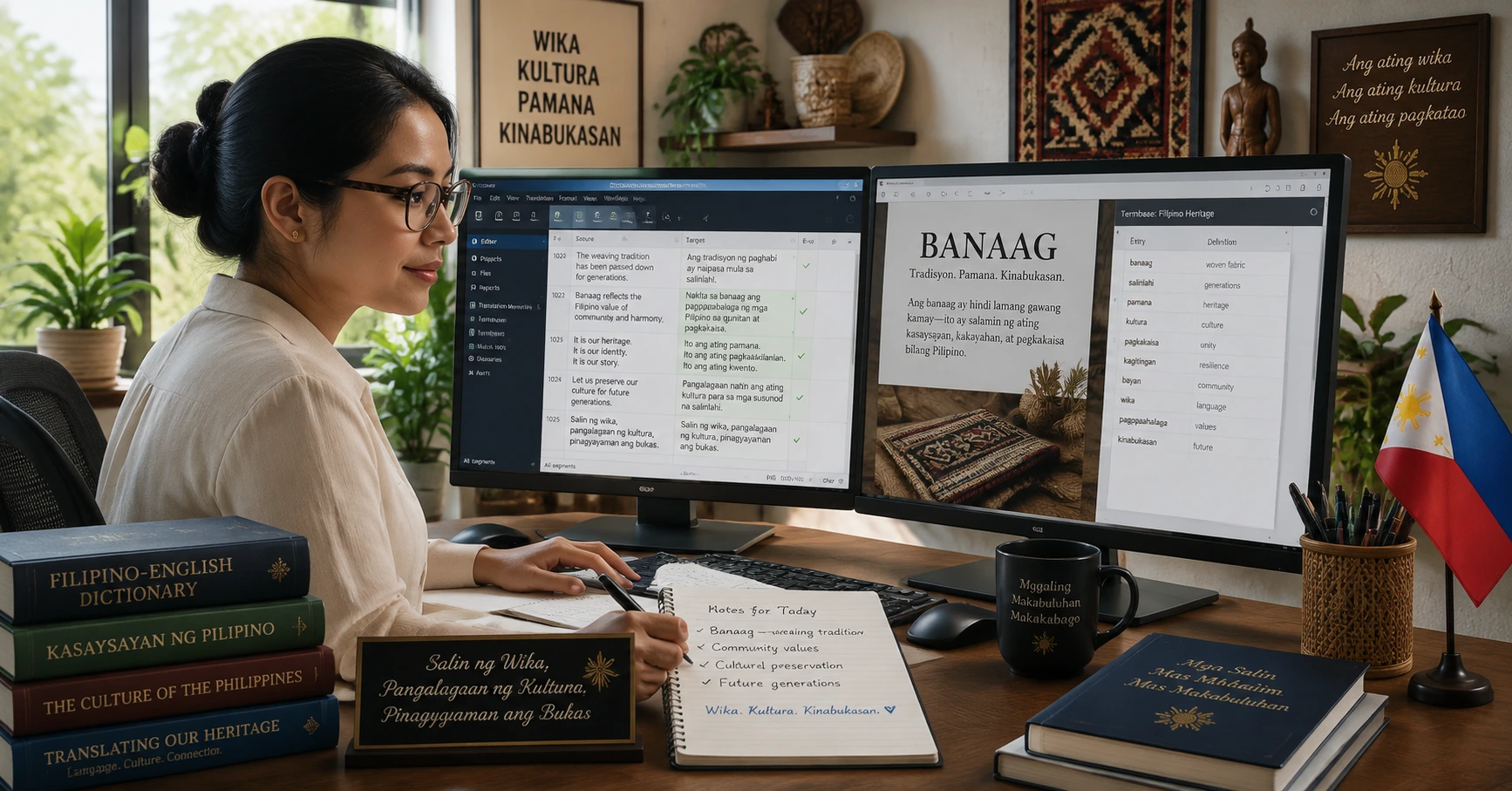
Importance of Proper Translation into Filipino
Proper translation into Filipino is vital to prevent misunderstandings, especially in sensitive fields such as legal, medical, and educational documents. Accurate translation ensures that the intended message is conveyed clearly and respectfully, avoiding potential errors that could lead to serious consequences. For example, translating financial transactions from Argentina to PHP requires precise conversion and contextual understanding to maintain accuracy and trust.
Moreover, pagsasalin sa wikang Filipino translation plays a key role in promoting Filipino culture and identity. Using local idioms, expressions, and culturally relevant terms makes translated content more relatable and engaging for Filipino audiences. This cultural sensitivity helps preserve the richness of the Filipino language while facilitating effective communication across diverse groups.
Techniques for Effective Translation
Understanding the Context
A fundamental technique in pagsasalin sa wikang Filipino translation is thoroughly understanding the context of the original text. Translators must go beyond literal word-for-word translation and consider cultural nuances, idiomatic expressions, and the target audience’s expectations. For instance, when translating from Spanish to Tagalog, it is important to adapt idioms and phrases so they resonate naturally within Filipino culture.

Use the Right Tools
Modern technology offers various tools like voice translator Chinese to English apps and online platforms that can speed up the translation process. However, these tools should be used as aids rather than replacements for human translators. Manual review and editing are essential, especially when translating complex or technical materials, to ensure correct grammar and cultural appropriateness, such as when you need to translate Tagalog to English correct grammar.
Ensuring Accuracy and Clarity
Accuracy in translation into Filipino involves not only semantic correctness but also clarity and readability. Translators must choose words and sentence structures that are easily understood by the target audience while preserving the original message. This is especially important when dealing with questions like which is good in Tagalog, where subtle differences in meaning can change the interpretation.
Challenges in Translation and How to Overcome Them
One of the main challenges in pagsasalin sa wikang Filipino translation is dealing with the rich diversity of Filipino culture and idiomatic expressions. Words or phrases often carry multiple meanings depending on the context, which can lead to confusion if not properly understood. For example, the phrase which is good in Tagalog can have different translations depending on situational use.
To overcome these challenges, translators must have a deep knowledge of both the source and target languages, as well as their cultural backgrounds. Continuous learning, consultation with native speakers, and context-based adaptation are effective strategies to ensure that translations remain faithful and culturally appropriate.
Tools and Systems for Translation
| Tools |
|---|
| Online translation platforms (e.g., Google Translate) |
| Voice translator apps (useful for voice translator Chinese to English scenarios) |
| Translation memory software for consistency |
| Glossaries and bilingual dictionaries (especially for Spanish to Tagalog terms) |
| Professional human translators for final review and editing |
Combining these tools with expert knowledge ensures that pagsasalin sa wikang Filipino translation is both efficient and accurate. Whether converting currencies like Argentina to PHP or clarifying the meaning of phrases such as which is good in Tagalog, the right approach and resources make all the difference.